Was That Hole Already There? A Move-In and Move-Out Inspection Checklist for Landlords
A room-by-room rental inspection checklist you can print or copy, plus how to document condition so security deposit deductions hold up at move-out.
On this page
A tenant moves out after two years. There’s a burn mark on the counter and a hole in the bedroom wall. They say both were there when they moved in.
Without a move-in record, it’s your word against theirs. With one, it takes about a minute to settle.
The move-in inspection is the record that makes a fair security deposit deduction possible later. Here’s a room-by-room checklist, and how to document each item so it holds up.
How to do the inspection
- Walk it with the tenant if you can. Two people agreeing on condition on day one avoids most disputes on the last day.
- Rate every item. Use a simple scale like excellent, good, fair, poor or damaged, so “fair” means the same thing at move-in and move-out.
- Photograph anything that isn’t excellent, plus a wide shot of every room. Make sure the photos are dated.
- Write a short note for every flaw. “2-inch scratch on counter left of sink” beats “some wear.”
- Both sign and date it, and give the tenant a copy.
- Repeat the same checklist at move-out, in the same order, so you’re comparing like with like.
The checklist
Copy this, print it, or use it as the template in whatever you keep records in.
Kitchen
- Appliances (stove, oven, fridge, dishwasher, microwave). Do they work, and are they clean?
- Cabinets and drawers
- Countertops
- Sink and faucet: leaks, drainage
- Flooring
- Walls and ceiling
Living room
- Flooring or carpet
- Walls and ceiling
- Windows, screens and blinds
- Lighting
- Outlets and switches
Each bedroom
- Flooring or carpet
- Walls and ceiling
- Closet: doors, rods, shelves
- Windows, screens and blinds
- Lighting
Each bathroom
- Toilet: flush, base, seat
- Tub or shower
- Sink and vanity
- Flooring
- Ventilation fan
- Caulking and grout
Systems
- HVAC: runs and cools/heats, filter date
- Water heater
- Smoke and carbon monoxide detectors: test each one
- Plumbing: visible leaks under sinks
- Electrical panel
Exterior
- Roof (from the ground)
- Siding and paint
- Gutters
- Yard
- Fence and gates
Add rooms as needed: dining room, hallway, laundry, garage, basement.
Also record the meter readings, the keys and remotes handed over, and the date of the inspection.
Normal wear and tear vs. damage
At move-out, the question is usually whether something is normal wear and tear or damage. Normal wear generally can’t come out of a deposit. Damage generally can.
- Lightly worn carpet in walkways after two years: wear.
- A pet stain or a burn in the carpet: damage.
- Faded paint, a few small nail holes: generally wear.
- A hole in the drywall: damage.
Your move-in photos are what turn “damage” from an opinion into evidence.
Security deposit deadlines
States set their own deadlines and rules for returning deposits and itemizing deductions. In Texas, where I own rentals, the deadline is generally 30 days after the tenant surrenders the unit. Some other states are shorter. Look up your state’s rules before your first move-out, not during it.
How Rental Manager helps
Rental Manager is an iPhone app for landlords who manage their own properties. Its Inspections screen starts move-in, move-out, periodic and drive-by inspections from a room-by-room template like the one above. You can add rooms and items as needed.
Each item gets a condition rating, a note and photos. The app shows how many items are rated and flags anything poor or damaged.
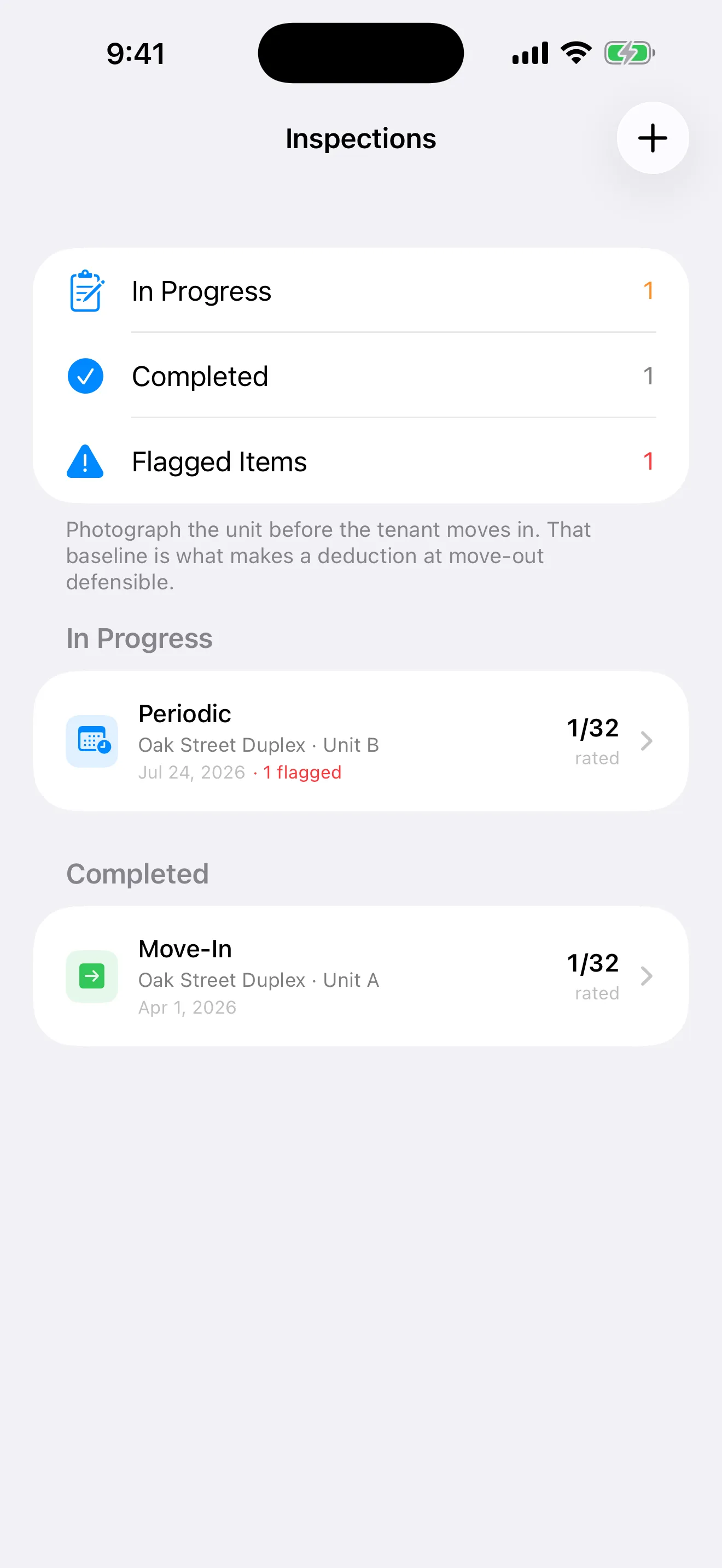
Demo data.
Inspections attach to the property and unit, so at move-out the move-in record is right there to compare against. Photos and data stay on your device.